
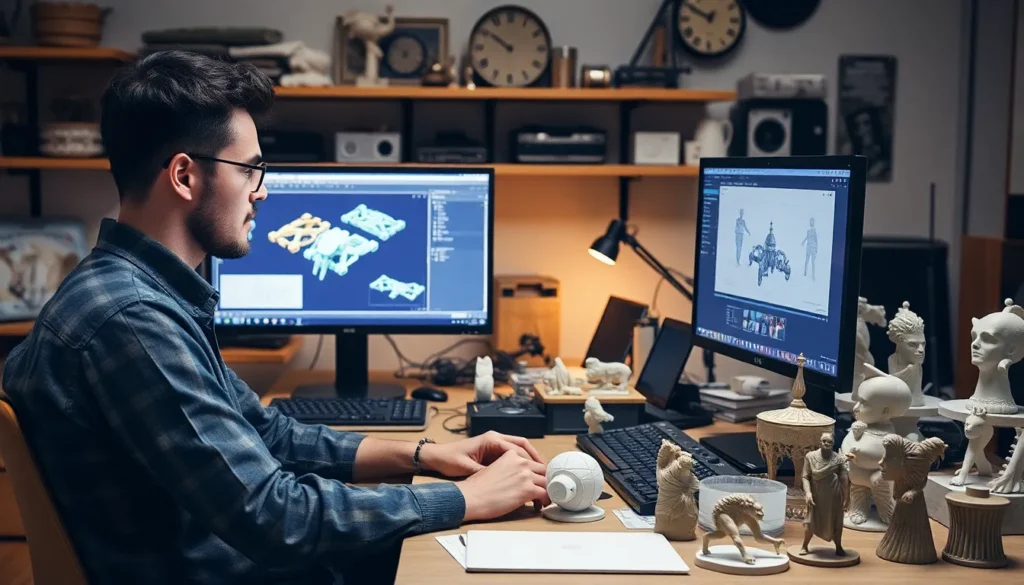
Imagine a world where creativity knows no bounds and the only limit is your imagination. Welcome to the realm of virtual 3D printing, where ideas leap off the screen and into the tangible world. It’s like having a magic wand that transforms pixels into products, minus the fairy dust and questionable spells.
In this digital playground, designers can experiment, iterate, and innovate without the hefty price tag of traditional prototyping. Whether it’s crafting a quirky coffee mug or a complex architectural model, virtual 3D printing makes it all possible and—let’s be honest—way more fun. So buckle up and get ready to explore how this cutting-edge technology is reshaping industries and igniting the passion of creators everywhere.
Overview of Virtual 3D Printing
Virtual 3D printing represents a significant advancement in design and manufacturing. This technology empowers designers to create, modify, and visualize products in a virtual environment before producing physical versions. Utilizing computer-aided design (CAD) software, creators can generate intricate models quickly.
Many industries, including automotive and fashion, benefit from this approach. Automotive manufacturers design prototypes faster, allowing for rapid testing and iteration. In fashion, designers can visualize garments on virtual models, reducing the need for physical samples.
Virtual 3D printing also stimulates collaboration. Teams can share designs easily across geographical boundaries, making real-time adjustments in a shared digital workspace. This collaborative aspect enhances creativity, as input from various stakeholders leads to better outcomes.
The environmental impact of virtual 3D printing can be substantial. Reducing material waste from failed prototypes decreases the ecological footprint of manufacturing. Additionally, local production can minimize transportation emissions, contributing to sustainability efforts.
Cost efficiency arises from the digital nature of virtual 3D printing. Companies save on materials and labor, making it more accessible for startups and individual creators. Overall, this technology not only fosters innovation but also streamlines the production process, making it an essential tool in modern design practices.
Technology Behind Virtual 3D Printing
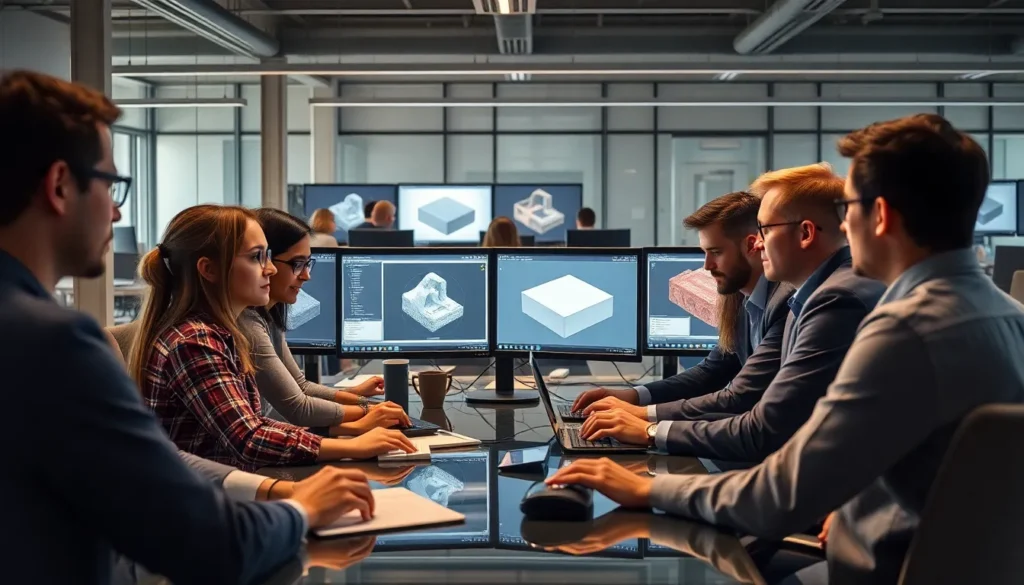
Virtual 3D printing relies on advanced tools and systems that facilitate the design and creation of objects in a digital space. This innovative approach enhances the entire manufacturing process.
Software Tools
Key software tools include computer-aided design (CAD) programs and simulation software. CAD applications streamline the design process by enabling users to create intricate models with accuracy. Simulation tools assess the durability and performance of designs, ensuring they meet required standards. Popular platforms like Autodesk Inventor and Rhino cater to various design needs. Cloud-based solutions promote collaboration, allowing teams to work together on projects regardless of location. These tools play a vital role in improving workflow efficiency and empowering creativity.
Hardware Requirements
Essential hardware supports the virtual 3D printing process. High-performance computers handle complex designs and simulations effectively. Graphics processing units (GPUs) optimize rendering speeds, providing quick feedback for users. 3D printers compatible with virtual designs offer flexibility in material choices and finishing options. Many creators enhance their setups with scanners that digitize physical objects for seamless integration into digital projects. Investing in the right hardware ensures a smooth experience when transitioning from virtual designs to tangible products.
Applications of Virtual 3D Printing
Virtual 3D printing finds diverse applications across multiple industries. Its versatility makes it an essential tool for modern design practices.
Prototyping
Prototyping enhances product development, allowing designers to create accurate and functional models quickly. Designers can visualize concepts using CAD software before moving to physical production. This process reduces time and costs associated with traditional prototyping methods. Iterative design becomes seamless with virtual 3D printing; teams can test various iterations without the need for extensive physical resources. Rapid prototyping creates opportunities for innovation by encouraging frequent experimentation. Companies in sectors like automotive, consumer goods, and electronics leverage this technology for efficient product testing and refinement.
Education and Training
Education benefits immensely from virtual 3D printing applications, providing interactive learning experiences. Students can engage with complex concepts through tangible models, enhancing comprehension. Training programs use virtual printing to create realistic simulations for various fields, such as engineering and medicine. Educators integrate this technology into curricula to foster creativity and critical thinking among students. Institutions also utilize virtual 3D printing for collaborative projects, allowing teams to share and refine designs in real-time. Aspiring professionals gain hands-on experience, preparing them for the demands of modern industries.
Benefits of Virtual 3D Printing
Virtual 3D printing offers numerous advantages across various sectors. Enhanced design flexibility allows creators to explore a wide range of shapes and sizes without physical limitations. Cost savings emerge as businesses significantly reduce material waste while circumventing the expenses linked with traditional prototyping methods.
Rapid prototyping enables designers to develop and test models at an accelerated pace. This quick iteration process facilitates innovation, allowing teams to refine their ideas rapidly. Improved collaboration becomes evident when teams utilize shared virtual environments, enabling real-time feedback and adjustments.
Environmental impacts align with sustainability goals. Reduced transportation emissions occur since products can be developed closer to their intended market, limiting the carbon footprint associated with logistics. Access to virtual 3D printing technology enhances opportunities for startups and individual creators, democratizing design and manufacturing.
Educational benefits also stand out as students engage in interactive learning experiences. Realistic simulations foster critical thinking and creativity, preparing future professionals for the evolving demands of industry. Industries such as automotive, fashion, and consumer goods exhibit noticeable productivity enhancements, underscoring the technology’s transformative power.
Finally, virtual 3D printing encourages exploration and experimentation. Designers can test new concepts without the risks and costs of producing physical prototypes. As technology continues to progress, the advantages of virtual 3D printing will likely expand even further, enhancing its role in contemporary design practices.
Challenges and Limitations
Adopting virtual 3D printing presents several challenges. One significant limitation involves the reliance on advanced software tools. These tools require expertise, and learning curves can hinder quick adoption, especially for startups.
Hardware constraints also pose issues. High-quality printers and computers often come with substantial costs, limiting accessibility. Specific industries may require custom solutions that aren’t readily available, further complicating the transition.
Another challenge includes the fidelity of printed models. Some designs may not translate effectively from virtual to physical forms. Inconsistencies in scale or material properties can arise, impacting the final product’s functionality.
Collaboration can lead to complications as well. Teams working in different locations might face difficulties with version control. Without effective systems in place, miscommunications can occur, causing delays and errors.
Sustainability isn’t without its drawbacks. While virtual 3D printing reduces material waste, the energy consumption of advanced printing processes can be significant. Balancing eco-friendly practices with energy efficiency remains an ongoing concern.
Finally, regulatory hurdles can slow down adoption. Different sectors may have specific safety and compliance requirements. Meeting these regulations can be complex, especially when venturing into new applications.
Navigating these challenges requires innovative solutions and ongoing adaptation in both technology and processes. Continuous development in software and hardware will likely address these limitations, yet awareness of these factors remains essential for successful implementation.
Future of Virtual 3D Printing
Future advancements in virtual 3D printing promise to revolutionize design and manufacturing. Increased integration of artificial intelligence enhances design precision and optimization. Innovations in augmented reality facilitate more immersive design experiences, allowing designers to visualize products in real-time settings. Next-generation software tools are emerging, streamlining workflows and enabling seamless collaboration across teams.
Widespread adoption across various sectors is expected as costs decrease. Industries like healthcare stand to gain significantly with customized medical devices, showcasing the technology’s potential. Increased sustainability efforts will align it with environmental goals, further promoting its use. Improvements in printing accuracy address current fidelity issues, ensuring the functionality of final products.
Collaborative platforms are becoming more sophisticated, reducing miscommunication and facilitating version control among teams. Reliability in outcomes strengthens the belief in adopting virtual 3D printing as a standard practice. New materials, including bioplastics and metals, expand the range of applications, making this technology applicable in diverse fields.
Education continues to benefit through increased emphasis on virtual 3D printing in curricula. Innovators can experiment without significant material costs, promoting a culture of creativity. Increased partnerships between institutions and industries are forming to harness the technology’s full potential.
Accessibility also improves through user-friendly software interfaces, inviting more individuals into the design space. Regulatory challenges may refine as the technology matures, fostering an environment conducive to innovation. Expanding adoption suggests that virtual 3D printing will become integral in shaping future products and solutions.
Virtual 3D printing stands at the forefront of design and manufacturing innovation. Its ability to streamline processes and foster creativity is reshaping how industries approach prototyping and product development. As technology continues to evolve, the potential for enhanced collaboration and sustainability will only grow.
The challenges that come with adoption are being addressed through advancements in software and hardware. This ensures that more creators can access the benefits of virtual 3D printing. With its promising future, this technology is set to play a crucial role in developing customized solutions across various sectors.
As virtual 3D printing becomes more integrated into everyday practices, it will undoubtedly pave the way for a more efficient and sustainable design landscape.


