
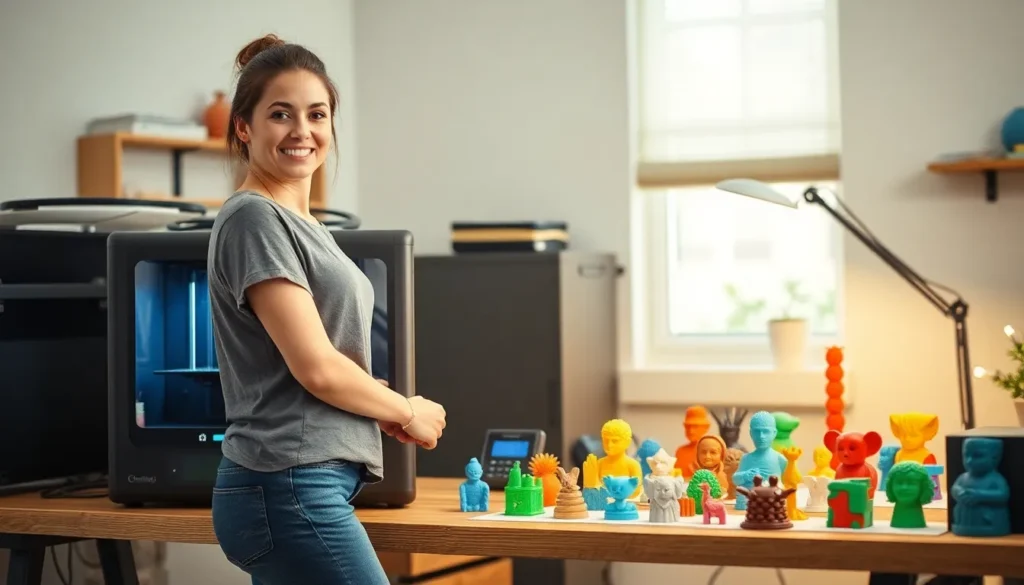
In a world where creativity knows no bounds, the 3D printer stands out as the ultimate tool for turning wild ideas into tangible reality. Imagine crafting everything from custom phone cases to intricate models right from your living room. It’s like having a mini-factory at your fingertips, minus the assembly line and the hard hats.
But let’s face it, diving into the 3D printing universe can feel a bit like trying to assemble IKEA furniture without instructions—overwhelming and slightly terrifying. That’s where this guide comes in. Whether you’re a tech-savvy enthusiast or just someone looking to impress friends with your newfound “maker” status, buying a 3D printer can be a game-changer. Buckle up as we explore the ins and outs of choosing the perfect 3D printer for your creative adventures.
Why You Should Buy 3D Printer
3D printers provide instant prototyping opportunities. Reducing the time from concept to creation can enhance workflow efficiency. A vast range of materials can be used, including plastics and metals, allowing for versatile applications. Cost savings often emerge from printing custom parts instead of purchasing them.
Quality can be tailored to specific needs using adjustable settings. Hobbyists frequently create unique models, while professionals leverage them for functional prototypes. Educational settings benefit significantly by engaging students in hands-on learning experiences.
The creative possibilities expand dramatically with access to numerous design software options, accommodating various skill levels. Personalization offers another exciting aspect, whether for home décor or custom gifts. Users can successfully print replacement parts for household items, saving money and reducing waste.
Flexibility encompasses not only design but also use cases. Industries such as healthcare, automotive, and aerospace increasingly rely on 3D printing for innovative solutions. By investing in a 3D printer, individuals gain the ability to experiment and innovate without extensive restrictions.
Exploring 3D printing encourages technological literacy, fostering an understanding of advanced manufacturing techniques. As individuals delve deeper, they can connect with a community of makers for support and inspiration. Becoming part of this network enhances creativity and opens doors to collaboration opportunities.
Types of 3D Printers
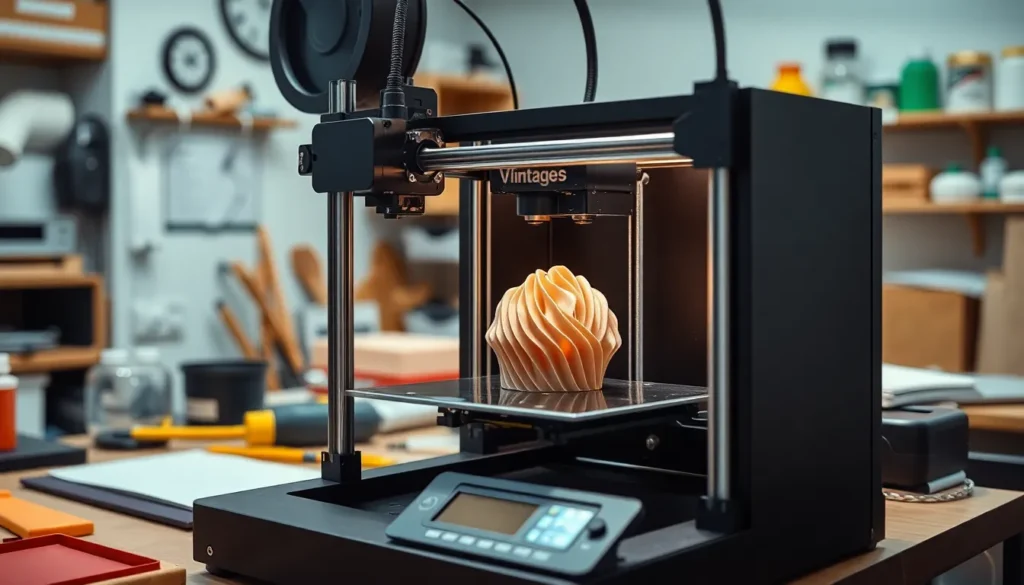
Understanding the different types of 3D printers helps users make informed decisions. Each printer type offers unique capabilities suitable for various projects.
FDM Printers
Fused Deposition Modeling (FDM) printers remain popular for their simplicity and affordability. These printers work by melting plastic filament, extruding it layer by layer to create objects. Users often appreciate the ease of access to materials, as numerous filament options, including PLA and ABS, exist. Many hobbyists choose FDM printers for prototyping and custom designs. Applications range from educational projects to functional tools. An average price for basic models starts around $200, offering a budget-friendly entry into 3D printing.
SLA Printers
Stereolithography (SLA) printers use a different process, utilizing a laser to cure liquid resin into solid forms. The high-resolution output appeals to designers needing detail and precision. Many industries, including jewelry and dental, leverage SLA’s capability for creating intricate parts. Resin options provide various finishing qualities, enhancing surface details. Pricing for SLA printers typically starts at about $500 but can vary greatly based on model features. Advanced users and professionals often prefer these printers for their superior accuracy and surface finish.
Key Features to Consider
When selecting a 3D printer, several key features influence performance and user experience. Print quality and build volume significantly impact the printing process and the final output.
Print Quality
Print quality relies heavily on layer resolution and nozzle size. Fine layer resolution creates finer details, making it vital for intricate designs. A smaller nozzle diameter enhances precision, ideal for models requiring high fidelity. Different materials also affect print quality. Users should consider the printer’s capabilities regarding various filament types. Enhanced cooling systems facilitate improved layer adhesion, further enhancing overall quality. Prioritizing printers offering dual extrusion allows for complex color designs or multi-material printing. These factors contribute to results that satisfy both hobbyists and professionals alike.
Build Volume
Build volume determines the maximum size of printed objects, impacting project scope. Larger build capacities enable users to create substantial prototypes or multiple models in one session. It’s essential to assess specific project requirements before deciding. Compact printers suit smaller creations, while expansive options accommodate larger objects. Users often favor printers with adjustable build plates for versatility. Consideration of vertical and horizontal dimensions can be crucial, especially for collaborative projects. A well-sized build volume allows for creativity without limitations, enhancing the overall 3D printing experience.
Best 3D Printers on the Market
Several 3D printers stand out for their features and reliability. The Creality Ender 3 offers exceptional affordability, making it ideal for beginners and hobbyists. An upgraded version, the Ender 3 V2, delivers enhanced print quality and user-friendly features.
For those seeking precision, the Anycubic Photon Mono provides high-resolution SLA printing. This printer supports detailed models, appealing to professionals in industries like jewelry and dentistry. Another notable option, the Prusa i3 MK3S+, boasts excellent print quality and a large online community for support.
The Ultimaker S3 is a favorite among professionals for its dual extrusion capabilities and versatile material compatibility. Users in engineering and design appreciate its reliability in producing complex prototypes. A more budget-friendly option, the Monoprice Select Mini, provides a compact design, suitable for those with limited workspace.
Educational settings benefit from the Dremel DigiLab 3D20 due to its ease of use and safety features. Students engage in hands-on learning while exploring creative projects. The Elegoo Mars 2 Pro excels in resin printing, offering affordability and impressive details, perfect for hobbyists wanting to create intricate models.
The Ender 5 Plus adds a larger build volume and stability to the mix, accommodating bigger projects. Meanwhile, the Artillery Sidewinder X1 features quiet operation and rapid printing speeds, appealing to users needing efficiency.
Understanding these options helps potential buyers align their priorities with their project requirements, whether focusing on budget, precision, or user support, ensuring a well-informed purchase decision.
Where to Buy 3D Printer
Several options exist for purchasing a 3D printer, catering to users with different preferences. Online marketplaces like Amazon and eBay offer a wide range of models, featuring user reviews and competitive pricing. Specialty retailers, such as Micro Center and Best Buy, provide an opportunity to see printers in person and seek expert advice.
Local makerspaces often showcase various 3D printers. Potential buyers can inspect models while exploring the benefits of community access. Also, educational institutions frequently sell or recommend printers suitable for students, providing a chance for hands-on experience with different technologies.
For those preferring brand-specific purchases, manufacturers’ websites like Creality and Prusa have direct sales. They often list exclusive discounts or bundles, enhancing the buying experience. Alternatively, online forums focused on 3D printing can connect buyers with individuals selling used equipment, creating budget-friendly options.
Trade shows and maker fairs represent excellent venues for discovering the latest models. Visitors can interact with vendors and ask questions directly, resulting in informed decisions. Retailers’ social media channels also announce special promotions or new releases, keeping potential buyers updated.
Buyers should consider regional distributors, as these organizations typically provide additional support and warranty services. Local distributors might also stock accessories and materials, ensuring a seamless integration into the user’s workflow.
Investing in a 3D printer opens up a world of creativity and innovation. Whether it’s for personal projects or professional applications the right printer can significantly enhance productivity and reduce costs. With various options available users can find a model that aligns with their specific needs and preferences.
The journey into 3D printing is filled with opportunities for learning and collaboration. By exploring different materials and techniques individuals can turn their ideas into tangible creations. Embracing this technology not only fosters creativity but also connects users to a vibrant community of makers.


