
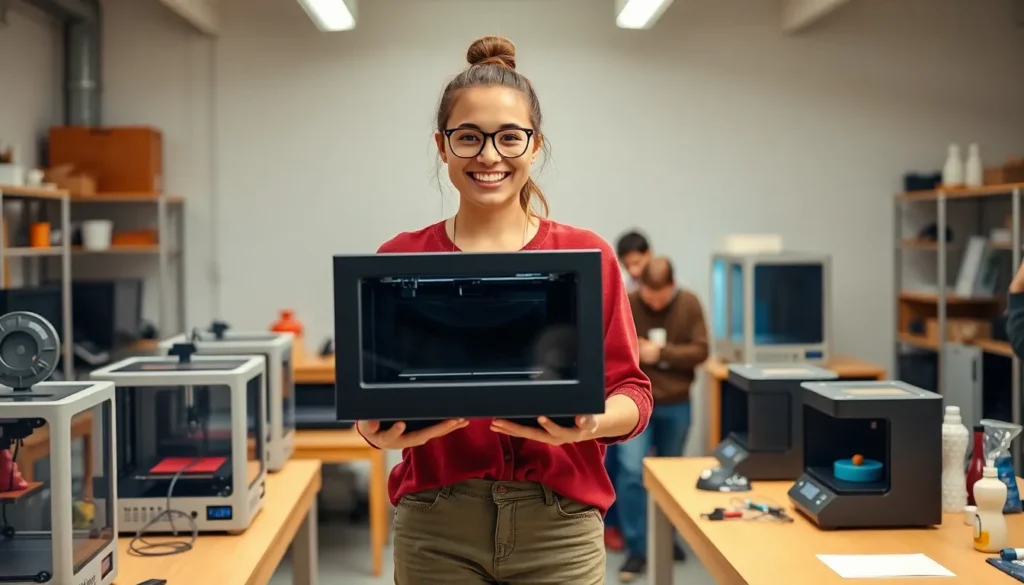
In a world where printers seem to have more drama than a reality TV show, 3D printer exchange programs are stepping in to save the day. Imagine a place where your outdated printer can find a new home while you snag the latest model without breaking the bank. It’s like a matchmaking service for tech enthusiasts—swapping out old for new, all while keeping the creativity flowing.
Overview of 3D Printer Exchange Programs
3D printer exchange programs serve as an innovative solution for upgrading technology. Participants trade in older printers and receive discounts on newer models. These programs enhance accessibility by providing an affordable option for hobbyists and professionals alike. Individuals engaging in exchanges can often benefit from the latest advancements in 3D printing technology.
Not only do these programs facilitate upgrades, they also promote sustainability. By recycling outdated printers, participants reduce electronic waste and contribute to eco-friendly practices. Many companies implement these programs, ensuring a diverse range of choices for users.
Community engagement plays a vital role in the success of 3D printer exchange programs. Organized events often occur where enthusiasts gather to share knowledge and experiences. Networking opportunities arise as individuals connect over shared interests.
Discounts and incentives vary across programs, providing participants with attractive offers. Several organizations provide points that can be accumulated through participation, which adds further value to the exchange process. This system encourages ongoing involvement and fosters a sense of community.
Users frequently report increased satisfaction with their 3D printing experience after participating in these programs. Enhanced features in newer models often lead to improved print quality and expanded capabilities. With numerous benefits, the popularity of 3D printer exchange programs continues to grow, fueling the creative potential in various industries.
Benefits of 3D Printer Exchange Programs
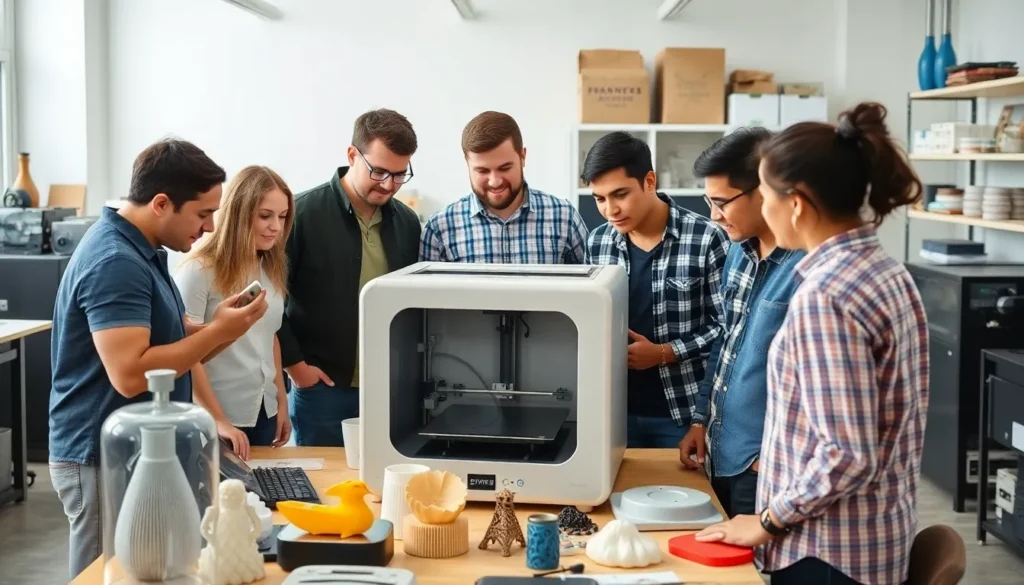
3D printer exchange programs offer multiple advantages that cater to enthusiasts and industry professionals alike. Such programs promote accessibility and sustainability in the 3D printing community.
Cost-Effectiveness
Cost-effectiveness remains a primary benefit of 3D printer exchange programs. Participants trade outdated models for updated versions, significantly reducing new equipment expenses. Many programs provide competitive trade-in values, making upgrades financially feasible. Savings compound with discounts offered on future purchases, making it easier for users to stay current with technology. Additional incentives like loyalty points often enhance value, encouraging continued participation. Overall, these programs create a budget-friendly pathway for anyone looking to enhance their 3D printing setup.
Access to Advanced Technology
Access to advanced technology is another essential benefit of 3D printer exchange programs. Participants gain entry to the latest advancements in 3D printing without overwhelming costs. Often, newer models incorporate improved features such as enhanced resolution and faster printing speeds. By participating in exchange programs, individuals can leverage innovations that significantly boost productivity. Enhanced capabilities also empower users to explore more complex projects and applications. Communities benefit when participants utilize advanced technology to push creative boundaries further.
How 3D Printer Exchange Programs Work
Understanding how 3D printer exchange programs operate is essential for potential participants. These programs facilitate the transition from older to newer printer models while enhancing creativity, accessibility, and sustainability.
Application Process
Participants typically begin by filling out an application form, which can be located on the program’s website. Some programs request details about the current printer model and its condition. Approval often comes quickly, allowing users to proceed with the next steps. Collecting necessary documentation, such as proof of purchase, can expedite the process. Following approval, participants receive guidelines for returning their outdated printers, ensuring a smooth transition to the new model.
Exchange Logistics
Logistics play a crucial role in the exchange process. Participants generally ship their old printers to designated collection centers or drop them off at local stores. Shipping costs may vary, with some programs covering expenses to encourage participation. Upon receipt, the program evaluates the conditions of the returned printers. Participants often receive credits or discounts based on the evaluation, significantly impacting their new printer purchase. This streamlined approach effectively promotes sustainability while making access to advanced 3D printing technology easier and more affordable.
Popular 3D Printer Exchange Programs
Several notable programs facilitate the exchange of 3D printers, promoting both affordability and innovation. Participants frequently benefit from various trade-in options and discounts.
Program A
Program A offers trade-in values that vary by printer model, enabling users to receive substantial credits toward newer units. This program emphasizes ease of participation; users complete a simple online form and arrange for their old printers to be evaluated. Shipping costs are often covered, alleviating any financial burden associated with returns. Enthusiasts appreciate the program’s focus on community, hosting regular events to foster collaboration and knowledge-sharing among users. Many participants report enhanced satisfaction due to access to advanced features present in the latest printer models.
Program B
Program B stands out for its competitive trade-in offers and exceptional customer support. The process begins with participants submitting details of their current printer, followed by an evaluation phase. Many users find the quick turnaround time appealing, facilitating swift access to newer technology. In addition, the program frequently provides exclusive discounts on future purchases, rewarding ongoing loyalty. Program B also focuses on sustainability by ensuring that returned printers are responsibly recycled or refurbished. Engaging promotional events allow users to immerse themselves in the 3D printing community, enhancing their overall experience.
Program C
Program C prioritizes inclusivity by accommodating a diverse range of printer brands and models for trade-in. Upon submitting a trade-in request, participants can expect a personalized assessment of their printer’s condition. This program also features flexible shipping options, which contribute to its accessibility. Users often rave about the program’s commitment to education, offering workshops and resources to help individuals improve their 3D printing skills. Incentives are regularly provided for referrals, further encouraging community growth. By promoting affordability and sustainability, Program C continues to attract a growing number of enthusiasts eager to explore the latest technologies in 3D printing.
3D printer exchange programs are reshaping the landscape of 3D printing by making advanced technology accessible and affordable. By promoting sustainability and community engagement these initiatives foster a collaborative environment where creativity thrives. Participants not only benefit from cost savings but also gain access to the latest innovations that enhance their printing capabilities. As these programs continue to gain traction they hold the potential to revolutionize how individuals and businesses approach 3D printing, ultimately driving progress across various fields. Embracing these opportunities can lead to a more sustainable and innovative future in the world of technology.


